

CHINA'S EXPANDING REACH
How China is Reshaping the Greater Middle East
Min Mitchell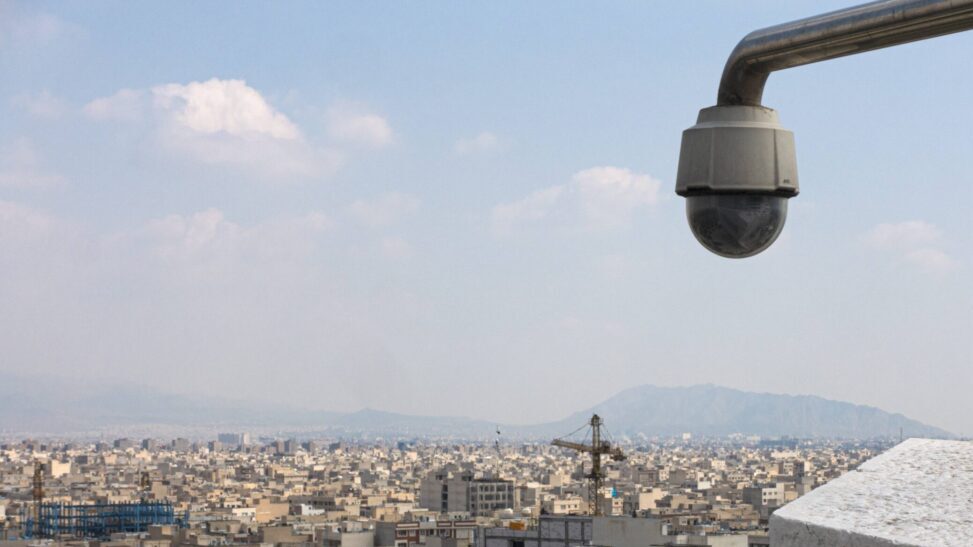

In the summer of 2026, as the U.S.-Israeli conflict with Iran progressively choked off the Strait of Hormuz, Saudi Arabia and its Gulf neighbors turned to Beijing rather than to Washington. They asked China, the largest destination for oil moving through the Strait, to use its influence on Tehran to reopen the waterway.[1] Beijing, however, did little; it sent envoys and made calls, but it did not publicly lean on Tehran. It ruled out any use of force, and, in April, joined Russia in vetoing a Security Council resolution authorizing coordinated escorts for regional shipping.[2] In the end, the job of safeguarding the world’s most important oil chokepoint remained where it has been for decades: with the U.S. Navy.
Beijing’s restraint was deliberate. China has never sought to replace the United States as the region’s security guarantor. Instead, it is doing something quieter and, over time, harder to counter: increasing its influence as the region looks to diversify its economic, defense, and cultural relationships.
That approach is paying dividends. A generation ago, regional leaders had few options but to look to Washington. Today, they are actively courting other suitors. And by playing the great powers off against one another, they are extracting what they can from each. When the focus shifts to capital, infrastructure, and telecoms, however, the regional gaze is increasingly turning eastward.
What the Data Shows
To measure the scale of that shift, the Middle East Broadcasting Networks recently launched the Great Powers Index, a model that scores each of the region’s 23 states across five metrics of influence: military, economy, diplomacy, soft power, and technology. It also tracks which way each country leans between Washington and Beijing.[3] The data is striking; between 2020 and 2025, China boasted closer ties with 12 of 23 Middle East/North African (MENA) states than did the United States. That figure was up from nine a decade earlier. Over that period, three states crossed from the American column to the Chinese one: Iraq, Morocco, and Egypt.[4]
What matters most, though, is not the number but the larger trend it embodies. The Index reflects a gradual tilt toward Beijing, one built state by state and contract by contract, and without the alliances, bases and security guarantees on which much of American influence rests. Even so, the Index does not show China overtaking the United States; in the arena of hard power, America still leads decisively. However, Beijing has been the region’s leading trading partner since 2010, and it has converted that trade into a sustained presence. The People’s Republic of China’s (PRC) total trade volume with the region hit $510.2 billion in 2025, more than two-and-a-half times the American figure and roughly 80 percent more than it had been in 2020.[5] By the end of 2025, the Index counted 468 China-led projects across the region under the rubric of the Belt & Road Initiative, with 158 of them in the United Arab Emirates and Saudi Arabia alone.[6] The reasons for this growth aren’t difficult to discern; Chinese financing, after all, comes without the political conditions Western lenders attach, and Chinese firms bring experience on large-scale projects that regional states seek.[7]
The Index also shows that this engagement is concentrated. A handful of large economies account for most of the activity, and those are the countries whose larger geopolitical direction is now being genuinely contested. The UAE and Saudi Arabia lead the region by a wide margin, and over the past six years, both have moved out of the U.S.-leaning quadrant into the center, where they can now be classified as active hedgers: states that rely on the U.S. for security while expanding ties with China on trade, technology, and energy. Egypt and Iraq have gone even further, drifting decisively into China’s orbit as a result of Belt & Road infrastructure and energy investment.[8]
By contrast, Israel remains tethered to Washington, while America’s security relationships with Bahrain, Jordan, and Qatar continue to be robust. Still, the trajectories of other nations are increasingly in play, as China builds real regional influence.[9]
Where China Leads
In economic terms, China’s regional engagement has been multifaceted. The largest single class of Chinese projects is renewable energy: 72 of them in total, including a 500-megawatt solar field in Egypt, a 200-megawatt wind farm in Oman, and a 700-megawatt solar array in Dubai.[10] In 2025, China sold more than 628,000 electric and hybrid vehicles in the region, roughly 37 times as many as it did in just four years earlier in 2021.
Technology has followed the same trajectory. From 2020 to 2025, commerce in tech goods between China and the region rose about 65 percent to $21.1 billion. During the same period, Chinese investment in regional technology doubled to $4.8 billion, with the sharpest gains in Turkey, Egypt, Oman, and Saudi Arabia.[11] America’s share of the regional tech trade, by contrast, was more modest; it reached just $7.8 billion in 2025, or roughly a third of China’s volume. The difference, moreover, is not just in volume, but in the kind of Chinese tech that is proliferating. For instance, China’s state-controlled telecom giant Huawei, which has progressively been shut out of American and most European networks on security grounds, has found a welcoming market in the Middle East and North Africa and now builds the core networks that carry the region’s telecommunications traffic.
When it comes to the sophistication of the technology itself, however, the situation is reversed. China competes on price in telecoms and consumer hardware, while the United States does so on artificial intelligence, where its lead is both real and attractive to regional consumers. Washington has backed that advantage with money, including the Stargate project in the UAE and Microsoft’s $15 billion investment in the Emirati group G42, as well as with pressure. The latter has yielded results; G42, for instance, severed its ties to Chinese firms and turned to Microsoft and OpenAI. Iraq, too, pulled back from some technology cooperation with Beijing following warnings from Washington. Overall, however, Gulf governments are increasingly the ones choosing, and they are picking Chinese systems for immediate infrastructure and American firms for high-end AI.[12]
Surveillance technology, meanwhile, is its own market, and it is one dominated by the PRC. According to MBN’s China Tracker, a companion project that maps Chinese activity across the region sector by sector, China is the leading supplier of video-surveillance systems to the region. The UAE ranks as the largest destination in this regard, with more than $3 billion in purchases since 2007, followed by Turkey and Saudi Arabia. Iran ranks among the top buyers as well, and Chinese equipment has been linked to Tehran’s repeated crackdowns on protesters, including the one that preceded Operation Epic Fury.[13] Significantly, through such purchases, governments buy not only a consumer product but also the machinery to control their populations.
The Long Game in Soft Power
The same expansion runs through the region’s classrooms and newsrooms. American soft power has traditionally grown organically, buoyed by culture and brands that people seek out. By contrast, China’s attempt at soft power is built deliberately. The goal is to make Chinese language, institutions, and perspectives understood, and ideally accepted, by the region’s present and future generations. As one China scholar puts it, understanding and acceptance come first; admiration, if it comes at all, comes later.[14]
Accordingly, China’s institutional soft power footprint has been expanding over the past several decades. The first Confucius Institute in the region opened in Beirut in 2006. There are now 29 such Institutes across the Middle East and North Africa, with the most recent opening in Algeria in September 2025.[15] Criticized in the West for a curriculum that avoids the history of Tibet, Taiwan, and Tiananmen, these programs have been largely welcomed in the region. Beijing likewise has incorporated Chinese language courses into primary school curricula across eight countries in the region. That push is anchored in the UAE, where language instruction occurs for more than 73,000 students in 181 public schools. Beijing has also opened six cultural centers and the vocational Luban Workshops, which tie technical training directly to Belt & Road contracts.[16] In Egypt, two Luban Workshops launched in 2020 and have now trained more than 3,000 students in renewable energy, automotive repair, and smart manufacturing.[17]
Travel between the region and China has followed suit. Direct flights rose from 161 a week in 2015 to 314 weekly a decade later, and Beijing has begun waiving visas for Gulf travelers altogether.[18]
But the Chinese Communist Party’s propaganda and influence work is on clearest display in the realm of news media. China’s expanding media footprint follows Xi Jinping’s 2013 directive to “tell China’s story well,” which made strategic narrative into a pillar of national statecraft. That line of effort was broadened in 2021 into a call to cultivate a “trustworthy, loveable and respectable” image and to “expand China’s circle of friends.”[19] With this in mind, Chinese state media outlets have signed 31 content-sharing partnerships across the region, concentrated in the media hubs of the UAE and Egypt.[20] The mechanism is straightforward. Xinhua, Beijing’s state wire service, offers global coverage to regional outlets for free or at low cost, while the Associated Press, Reuters, and Bloomberg charge subscription fees that many newsrooms cannot or will not pay. The result, as one analyst of Chinese media strategy has argued, is an effective channel for a slanted account of world events—one carried, moreover, by trusted local outlets.[21] On the whole, however, these tools have not necessarily translated into affection, and scholars describe Beijing’s cultural push as tentative despite its ambitions.[22]
Where American Dominance Still Holds
In terms of security, by contrast, China has shown no appetite to alter the Middle Eastern military balance. Washington maintains more than a dozen military facilities across the region. China, meanwhile, operates exactly one overseas base, in Djibouti, and that facility is set up largely to support anti-piracy patrols in the Gulf of Aden. Similarly American forces held military exercises with regional partners 41 times between 2020 and 2025; China held only 19.[23] And when attacks by Yemen’s Houthi rebels throttled shipping in the Red Sea, it was the United States, not China, that had the reach to strike back and defend local sea-lanes.
That said, Chinese military activity in the region is not exactly static. The Tracker records that Chinese military exercises with MENA states, of which there was just one throughout the entirety of the 2010s, have experienced a sharp rise since 2020, including the first China-Egypt air force drill, “Eagles of Civilization,” which took place in May 2025. Senior Chinese military delegations visited the region 26 times between 2015 and 2024, up from 16 in the previous decade.[24] China’s share of the region’s arms market likewise tripled over the decade, from under one percent in 2020 to 3.1 percent in 2024, enough to overtake Russia as a supplier (though still lagging far behind the United States, which accounts for roughly half of all major arms imported by regional states).[25]
Here, the customers differ, and so does the logic. American arms go to longstanding partners embedded in U.S. security networks. Chinese sales concentrate on a narrower set of buyers that are looking for cheaper platforms, fewer political conditions, or alternatives when Western suppliers are lacking or limited. They also cluster in categories that Washington is generally reluctant to sell, above all armed drones. Notably, what Beijing withholds is the security commitment itself. It may sell and train, but it does not promise to fight, and analysts consistently identify that reluctance as the ceiling on its regional influence.
How Beijing Reads the Region
Chinese writing helps to explain the comparative restraint. Strategists in Beijing have long viewed friction in the Middle East opportunistically, on the assumption that American entanglement there would limit Washington’s bandwidth to contest events or trends elsewhere.[26] The 2026 war has complicated that calculus at least somewhat. Beijing’s relationship with Tehran did indeed protect Chinese cargoes: Iran allowed oil to continue to flow to China, India, and Russia while barring vessels linked to its adversaries, and Chinese-linked ships accounted for the largest single share of the traffic that got through.[27] What Beijing could not do, and did not even attempt to do, was reopen the waterway for everyone else. In other words, China secured its own supply through a political relationship. The burden of restoring freedom of navigation, meanwhile, stayed with the U.S. Navy.
Even Chinese military commentary focuses on using regional turmoil to fortify domestic technological and economic resilience, rather than to play a larger security role abroad.[28] The practical effect is that the United States bears the external military costs while China concentrates on internal matters. Beijing, in other words, assumes that capital and infrastructure can help it avoid the region’s rivalries and fractious politics.
Against the backdrop of the Iran War, that assumption is bound to be tested. The United States still offers security guarantees, naval power, and financial leverage, while it supplies capital without conditions, rapid infrastructure, and 21st century technology at a discount. Increasingly, however, Beijing is also giving the region something it lacked a generation ago: a real alternative to Washington. The consequences for the long-term evolution of the region could turn out to be monumental.
-
[1] “Can China restrain Iran? Gulf states test Beijing’s influence,” Reuters, July 30, 2026, https://www.reuters.com/world/china/can-china-restrain-iran-gulf-states-test-beijings-influence-2026-07-30/. On China’s share of flows through the strait, see U.S. Energy Information Administration, “The Strait of Hormuz is the world’s most important oil transit chokepoint,” Today in Energy, n.d., https://www.eia.gov/todayinenergy/.
[2] United Kingdom, House of Commons Library, “Israel/US-Iran conflict 2026: Reopening the Strait of Hormuz,” 2026, https://commonslibrary.parliament.uk/research-briefings/cbp-10636/.
[3] Middle East Broadcasting Networks MBN Great Powers Index, September 2026, http://alhurra.com/en/great-powers-index.
[4] Ibid. Iraq, Morocco, and Egypt shifted from the U.S. to the Chinese side of the ledger between 2020 and 2025.
[5] Middle East Broadcasting Networks MBN China Tracker, n.d, https://alhurra.com/en/chinatracker.
[6] MBN Great Powers Index, Belt and Road project data.
[7] Mohamed El Dahshan, as quoted in Jim Snyder, Zhou Yu, and Inaara Gangji, “Findings from the Middle East Broadcasting Networks’ Great Power Index,” Middle East Broadcasting Networks, 2026, https://alhurra.com/en/36335.
[8] MBN Great Powers Index, Model 5.1. The UAE (4.19) and Saudi Arabia (3.93) record the region’s highest engagement scores; the Index classifies both, with Turkey and Egypt, as active hedgers within its hedging corridor. Egypt (2.59) and Iraq (2.07) are the highest-engagement states leaning toward China.
[9] MBN Great Powers Index. The Index treats the China-leaning position of Iran and Syria as shaped primarily by U.S. sanctions and absence rather than by Chinese engagement.
[10] MBN Great Powers Index, renewable-energy project and vehicle-export data.
[11] MBN Great Powers Index, technology trade and investment data. U.S. technology trade with the region rose from $3.8 billion in 2020 to $7.8 billion in 2025.
[12] MBN China Tracker, technology installment. On the Stargate project in the UAE and Microsoft’s investment in G42, see https://alhurra.com/en/chinatracker.
[13] MBN China Tracker, technology installment, on Chinese surveillance exports, the Digital Silk Road (2015), and the Global Security Initiative (2022).
[14] Yun Sun, as quoted in MBN China Tracker, soft power installment.
[15] MBN China Tracker, soft power installment.
[16] Zhang Yiming, “Zhong-A gaozhiliang hezuo zou zai shidai qianlie: fang zhu Alianqiu dashi Zhang Yiming” [China-UAE High-Quality Cooperation Stands at the Forefront of the Times: An Interview with Ambassador to the UAE Zhang Yiming], People’s Daily Online, January 29, 2026, http://world.people.com.cn/n1/2026/0129/c1002-40409821.html.
[17] “Luban gongfang peiyu jishu rencai” [Luban Workshops Cultivate Technical Talent], People’s Daily, December 15, 2021, https://www.yidaiyilu.gov.cn/p/00EVDCCD.html.
[18] MBN China Tracker, soft power installment, direct-flight data. Weekly flights between China and the region rose from 161 in 2015 to 314 a decade later, with the UAE going from 59 to 104 and Saudi Arabia from five to twenty.
[19] Xi Jinping, “Jiang hao Zhongguo gushi, chuanbo hao Zhongguo shengyin” [Tell China’s Story Well, Spread China’s Voice Well], Qiushi, June 2, 2021, https://www.qstheory.cn/zt2020/jjg2021/2021-06/02/c_1127521876.htm. The original directive dates to Xi’s August 2013 address to the National Propaganda and Ideological Work Conference.
[20] MBN China Tracker, media installment.
[21] Joshua Kurlantzick, as quoted in MBN China Tracker, media installment. See generally Joshua Kurlantzick, Beijing’s Global Media Offensive: China’s Uneven Campaign to Influence Asia and the World (Oxford University Press, 2022).
[22] Razan Shawamreh, “China’s soft power (non) expansion in the MENA region,” Cogent Social Sciences 11, no. 1, 2025, https://doi.org/10.1080/23311886.2025.2470995.
[23] MBN Great Powers Index, military-presence and joint-exercise data.
[24] MBN China Tracker, military installment, drawing on the Chinese Military Diplomacy Database, Center for the Study of Chinese Military Affairs, National Defense University. On the May 2025 exercise, see People’s Republic of China, Ministry of National Defense, “Eagles of Civilization 2025,” 2025, http://eng.mod.gov.cn/xb/News_213114/NewsRelease/16382659.html.
[25] MBN China Tracker, military installment, arms-transfer data. The United States supplied roughly 52 percent of major arms imported by regional states between 2020 and 2024.
[26] People’s Republic of China, National Office for Philosophy and Social Sciences, “Zhongguo Shekeyuan Guojia Quanqiu Zhanlue Zhiku juban ’Ba-Yi chongtu: genyuan, yingxiang yu chulu’ yantaohui” [CASS National Global Strategy Think Tank Holds Seminar on “The Palestinian-Israeli Conflict: Roots, Impact, and Ways Out”], December 28, 2023, http://www.nopss.gov.cn/n1/2023/1228/c431031-40148701.html.
[27] Liu Jinxiang, “Yongbao ju’an siwei de zhanlue qingxing” [Maintaining Strategic Sobriety in Times of Peace and Danger], PLA Daily, 2026, http://www.81.cn/ll_208543/16453827.html.
[28] Ibid.