

THE HOT SEAT
The Trump Approach to Counterterrorism
Sebastian Gorka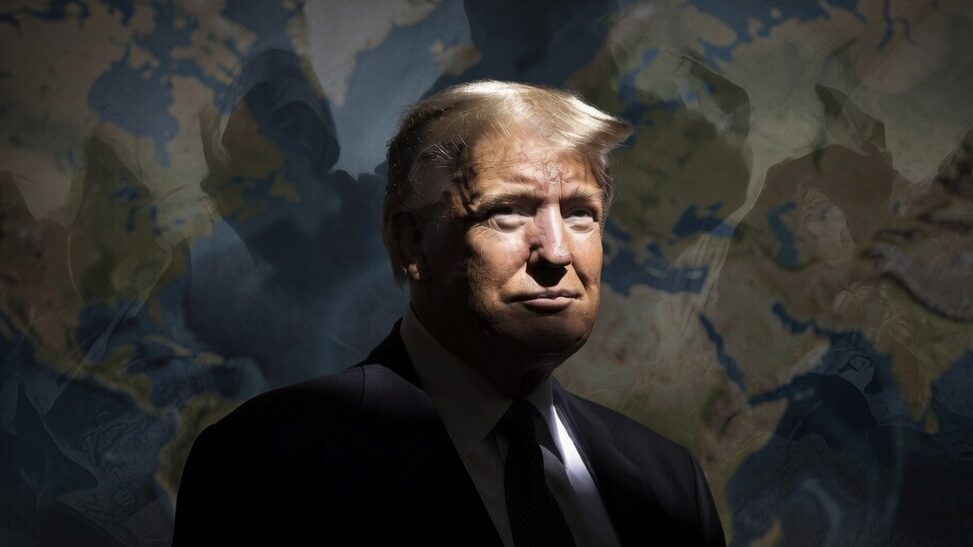

President Donald Trump standing in front of a map
Interview with Sebastian Gorka
Dr. Sebastian Gorka currently serves as Deputy Assistant to the President and Senior Director for Counterterrorism at the U.S. National Security Council, a position he has held since January 2025. He is the author of three books on counterterrorism and U.S. foreign policy, including Defeating Jihad: The Winnable War (Regnery Publishing, 2016).
In April, Dr. Gorka sat down with Statecraft & Strategy Editor-in-Chief Ilan Berman to talk about the Trump administration’s approach to counterterrorism, its views on the threats posed by groups such as al-Qaeda and the Islamic State, and how the conflict with Iran fits in.
Q: For the past year, you’ve served as the President’s pointman for counterterrorism. In that time, we’ve seen the U.S. carry out extensive counterterrorism operations in Africa and launch a new conflict in the Middle East that is at least partially about the Iranian regime’s persistent sponsorship of terrorism. Nevertheless, there’s clearly a change of priorities underway in U.S. foreign policy thinking, away from the old “Global War on Terror” and toward great power rivalry with the likes of China and Russia. How, then, do you characterize our approach to terrorism now?
We’ve moved away from the post-9/11 thinking that believed we could somehow social-engineer tribal societies with completely different values and civil societies into stable, Western-style democracies. That approach is not based in reality. We also reject the old Obama-era idea that terrorism basically comes from poverty or a lack of education. If that was the case, many more countries would be dealing with the problem. Moreover, the 9/11 hijackers, who were mostly educated and middle-class (as was Osama bin Laden himself) never would have done what they did. Those flawed assumptions led to a lot of dangerous passivity and bad counterterrorism policies on our part.
That’s not the case now. In our first twelve months, we brought justice to more than 700 members of the global jihadi movement. That steady tempo of precise, surgical strikes against the top terror groups threatening us is the heart of the Trump administration’s new counterterrorism approach. It rejects both endless “Forever Wars” and the previous reluctance to act decisively. We’re focused on the real, evolving nature of the threat, especially the global jihadi movements that emanate from both Sunni and Shi’a Islam.
Our mission is straightforward: protect innocent Americans and deliver justice to those who want to harm us. But we can only do that if we’re honest about the threat. We need to prioritize dangers to the homeland and hit those actors hard enough that they’re either destroyed or shift the burden and our local partners can keep them suppressed. Twenty-five years after 9/11, the question remains the same: Is America truly safe? President Trump is answering it with a reality-based approach to counterterrorism.
Q: Do we have the will to win this fight? I’m curious about how you frame the struggle, and what you think is required for us to persevere in it.
There’s no choice. Terrorism isn’t something you can totally “defeat” or wipe off the map because it’s a tactic, a method of warfare. But specific terrorist groups? Those absolutely can be eliminated. Real victory goes beyond simply containing these groups, however. We have to strike at their center of gravity: the thing that makes people want to join them, which justifies their violence, and what they use to intimidate everyone else. In this case, that center of gravity is jihadi ideology.
Whether we’re talking about the Muslim Brotherhood, al-Qaeda, ISIS, or a different group, they all share the same core belief: that Islam must return to its original 7th-century version as a martial faith that expands into a global theocratic caliphate ruled by strict sharia law. In that worldview, non-Muslims are either killed or forced into submission. These groups have been crystal clear about their goals. As President Trump said during his seminal speech in Warsaw back in 2017, the real question is whether we in the West have the will to defeat them.
Q: And how has America fared against this adversary in recent years? How would you assess our recent counterterrorism record?
We have to be intellectually honest here. Despite our massive conventional military power, our post-9/11 efforts haven’t delivered the strategic results we should have seen. Yes, there were some impressive early wins: the initial takedown of the Taliban in 2001, the raid that got bin Laden, the strikes on [IRGC General Qassem] Soleimani and [ISIS emir Abu Baker al] Baghdadi, and the destruction of ISIS’s physical caliphate. But we’ve also had major strategic failures: the missing weapons of mass destruction that served as the justification for the invasion and occupation of Iraq, the $7 trillion we spent there and the more than 4,000 American lives lost, only to watch Iraq fall under heavy Iranian influence and Afghanistan slide back into a jihadist safe haven after Biden’s disastrous withdrawal from Kabul.
What we need now is a full reset. That starts with an honest look at the actual terror threats facing us today. We have to rank and prioritize them properly so we can use our resources wisely and protect the American taxpayer. Without effective counterterrorism, we can’t keep our country safe or prevent another 9/11-style attack.
Q: So, to your mind, what needs to change in U.S. counterterrorism policy? And how does the Iran war fit into this frame?
Let’s be blunt: decades of the “Global War on Terror” haven’t made us safer. In many ways, endless foreign adventures and weak homeland security have actually made the threat worse. At the same time, real dangers still exist. These include ISIS franchises that are now spreading across the Middle East and Africa, and Iran’s indirect war against us through its proxies.
In the first couple of weeks of President Trump’s second term, our intelligence and Pentagon teams told us that during the Biden years, we had multiple clear opportunities to take out high-value jihadi targets, people responsible for killing Americans or actively plotting new attacks. Yet in most cases, the previous administration chose not to act. President Trump reversed that. We’re now going after the leaders who are planning, recruiting, and financing attacks against us and our partners, and using more aggressive rules of engagement to do so.
Then there’s Iran, the world’s leading state sponsor of terrorism. The regime in Tehran has openly declared its desire to destroy both America and Israel. Instead of building a better future for its own people, it’s poured billions into arming and training terrorists and militias across the region. It has also built networks specifically targeting U.S. officials, including President Trump himself, in retaliation for the 2020 strike on Qassem Soleimani.
Given Iran’s explicit goals, its deadly track record, and its support for groups that have killed thousands, including American troops, the threat was undeniable. Through our actions, President Trump has sent a clear message: Tehran must dismantle its nuclear program and stop backing terrorist groups and jihadi militias.
Q: What allies and resources do we have in this fight?
Our Muslim partners in the Middle East and Asia are especially important, particularly on the ideological side. With our support, they’re in the best position to push back against the jihadi vision of Islam and make it much harder for these groups to recruit new fighters. Counter-ideology is something we need to invest in seriously.
Here at home, we’re also taking concrete steps. We’ve begun the process of designating the Muslim Brotherhood as a Foreign Terrorist Organization, starting with its founding Egyptian branch along with the Lebanese and Jordanian chapters of the organization. This should have happened years ago. The Brotherhood is the ideological root of the worst modern jihadist groups. Treating it as such is long overdue.