


The Horn of Africa has emerged as a defining arena of geopolitical competition. China is expanding its military footprint there. The conflict with Iran has turned the Red Sea into one of the world’s most contested waterways. Great power competition has returned to a region through which close to 20 percent of global maritime trade passes every day, including a quarter of all oil tanker traffic.
At a moment when the United States is seeking reliable partners to advance its security and economic interests, Somaliland offers something increasingly scarce: security cooperation in a strategic geographical location, economic partnership, democratic governance, and diplomatic reliability.
For more than three decades, Somaliland has built a democratic, stable, and pro-Western state on the southern shore of the Gulf of Aden. We have held competitive elections, transferred political power peacefully, maintained free and open markets, secured our territory, protected our coastline, and built functioning state institutions all without international recognition.
Until last December, when Israel became the first United Nations member state to recognize us as a sovereign and independent nation. That decision reflected the reality on the ground in Somaliland, as well as our country’s growing strategic importance. Six months later, I traveled with President Dr. Abdirahman Mohamede Abdillahi to Jerusalem for the first state visit anywhere by a President of Somaliland.
There, President Abdillahi was received by Israeli President Isaac Herzog with full state honors in a moment that, to many, would have seemed unimaginable only a few years ago. As Somaliland’s flag flew in Jerusalem, we met with Israel’s political, security, and business leaders to discuss how two small democracies at opposite ends of the Red Sea could work together to advance stability, prosperity, and regional security.
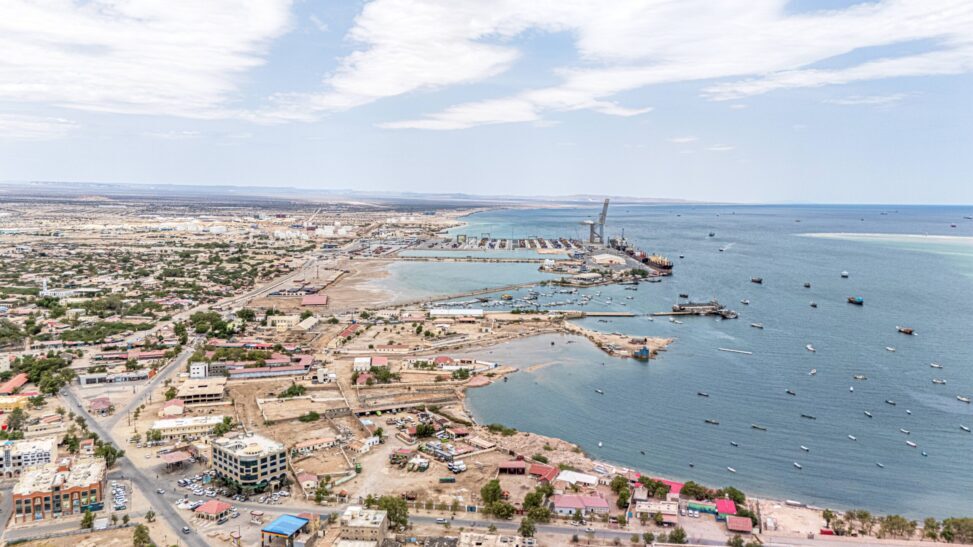
Our partnership with Israel reflects a broader strategic reality. Somaliland sits just 70 miles from the Bab el-Mandeb Strait, one of the world’s most consequential maritime chokepoints. Stretching along the Gulf of Aden, our coastline and the Port of Berbera overlook a vital artery for global trade and energy flows.
Our foreign policy reflects the same principles that have sustained our democracy. In 2020, Somaliland formalized a bilateral agreement with Taiwan establishing reciprocal offices and cooperation across agriculture, energy, health, trade, and technology despite Chinese pressure. When China failed to sway us from this partnership, Beijing turned to coercion, pressuring Somalia to weaponize its airspace and visa systems to limit international access to our capital.
We have not been deterred, however, and Somaliland’s willingness to stand firm has strengthened the confidence of other partners who share our interests. As a result, while formal recognition may still be debated in diplomatic circles, engagement is already happening with Taiwan and a number of other international partners.
For instance, DP World, a UAE global logistics operator that moves 10 percent of world trade daily, has deployed $442 million to modernize the port at Berbera. Their investment demonstrates growing international confidence in Somaliland as both a commercial gateway and a strategic hub.
Likewise, in July, I welcomed British Ambassador Charles King to discuss the future of the longstanding Somaliland–UK partnership. Somaliland’s ties to Great Britain date back to the colonial era, when Britain administered the territory as a separate protectorate while Italy governed Somalia to the south. That distinction has defined the region’s political identity ever since.
The United Kingdom, Denmark, and UAE now all maintain diplomatic offices in Hargeisa, as do our neighbors Kenya and Ethiopia.
For the U.S., the strategic implications should be difficult to ignore. America’s only permanent military base in Africa sits at Camp Lemonnier in Djibouti. China opened its own facility there in 2017, and has been expanding its regional presence ever since. Beijing is also deepening its political and security ties with Mogadishu.
Turkey recently extended its troop deployment in Somalia for another two years. Across the Strait, the current conflict with Iran threatens to turn the Red Sea into one of the world’s most significant maritime security challenges, disrupting freedom of navigation and putting global shipping lanes at risk.
Berbera offers the U.S. a stable, democratic hub with no competing foreign military presence and a deepwater port. Recognizing Somaliland would give Washington direct access to a critical maritime corridor, a stronger hand in countering Chinese and other foreign influences in the Horn region, and the freedom to engage in ways that its relationship with Mogadishu currently prevents.
Congress, moreover, has increasingly signaled its support for deeper U.S. engagement with Somaliland. Senator Ted Cruz, Chairman of the Senate Foreign Relations Subcommittee on Africa, is one of Somaliland’s strongest advocates, calling us “a geo-strategic U.S. maritime security partner in Africa” and urging the Trump administration to recognize Somaliland as an independent state. More recently, he wrote Secretary of State Marco Rubio to establish a separate U.S. travel advisory for Somaliland, arguing that Washington’s current approach fails to reflect the reality on the ground and unnecessarily constrains engagement with a dependable partner.
He is not alone. In 2022, the bipartisan Somaliland Partnership Act championed by Senator Jim Risch and others cleared the Senate Foreign Relations Committee. Its core provisions were subsequently signed into law in the 2023 National Defense Authorization Act, marking the first time Somaliland had ever appeared in U.S. legislation.The bipartisan effort was led by Rep. Marc Veasey and Rep. Chris Smith.
The list goes on. Representative John Moolenaar, Chairman of the House Select Committee on the Chinese Communist Party, has pressed the State Department to establish a U.S. representative office in Hargeisa. Congressman Scott Perry has introduced legislation authorizing the President to recognize Somaliland’s independence. Representative John Rose has introduced the Somaliland Economic Access and Opportunity Act, recognizing that greater economic engagement with Somaliland advances American security and commercial interests.
This congressional momentum has been matched by engagement on the ground. Late last year, for example, General Dagvin Anderson, Commander of U.S. Africa Command, visited us to discuss shared security priorities as the region grows in importance.
In other words, the foundation for a deeper partnership reflecting the realities of today’s strategic environment already exists. Formal recognition is an important step, but it should be seen as the beginning of a broader agenda: deeper security cooperation, expanded trade and investment, and sustained engagement that advances both American and Somaliland interests.
The strategic case for closer engagement has never been stronger: a democracy that has endured for more than three decades, a coastline that safeguards one of the world’s most critical waterways, and a partner that has consistently aligned itself with the West—even when doing so came at a cost. As America’s strategic competitors deepen their influence across the Horn of Africa, the U.S. has an opportunity to strengthen a partnership that already exists in practice.
My country is not asking Washington to take a leap of faith by recognizing Somaliland’s sovereignty. We are asking it to build on a partnership that has already demonstrated its value—to regional security, to freedom of navigation, and to America’s long-term strategic interests.